


Most private aviation website redesigns fail for the same reason they were started: someone decided the site looked dated. Design updates without positioning updates are polish on the wrong problem. The result is a prettier website that converts the same as the old one.
If you are researching a private aviation website redesign right now, this article is the one to read first. We will cover the signs that your site actually needs a rebuild, the parts most operators get wrong, and what a real redesign changes in the way inbound moves through the site.
This is based on the six aviation brands we have designed and built at beterdesign — Hudson Jets, Reliance Jets, Paraflight, JetSet GRP, FLY1200, and ARM Charter — across charter operators, membership brands, and specialized operations.
What most private aviation websites get wrong
Almost every charter site we audit leads with the same call to action: request a quote. That structure works for brokers who shop quotes across operators they do not own. It works against operators who own their aircraft, run their own crews, or offer memberships — because it positions them the same way it positions everyone else in the category.
The vocabulary is borrowed. The layouts are borrowed. The hero videos are borrowed. If a client cannot tell within the first five seconds why your operation is different from the next tab they have open, the redesign has not started — the copy still needs to.
Sign 1: Your site could be any other charter site
Open your homepage next to three competitors. If the visitor could not tell within ten seconds which one is yours, your site is not doing brand work. It is doing template work.
The fix is not more animation or better photography. It is a clear answer to one question: what does this operation offer that the others do not? Sometimes the answer is fleet. Sometimes it is membership. Sometimes it is the type of missions the operator runs. Whatever it is, that answer belongs on the homepage in the first two seconds, not on an About page four clicks in.
Sign 2: Your fleet is buried behind a quote form
Most charter sites treat the fleet as reference material. Aircraft appear on a sub-page as thumbnails and specs, and the primary CTA on every page is request a quote.
For an operator who actually owns their fleet, that is a wasted asset. The fleet is the product. Each aircraft should have its own page — photography, specs, capacity, range, hourly cost framing, and an inquiry CTA tied to that specific tail number. The site starts to work like a product catalog for the people who care what they are flying on. That is exactly what we built for Reliance Jets in partnership with N5 Marketing.
Sign 3: Your differentiator is on page two
Membership programs. Empty legs. Organ transport missions. Ambulance operations. Fractional programs. Guaranteed availability windows. These are the things that separate one operator from the next in the private aviation category — and they are almost always buried.
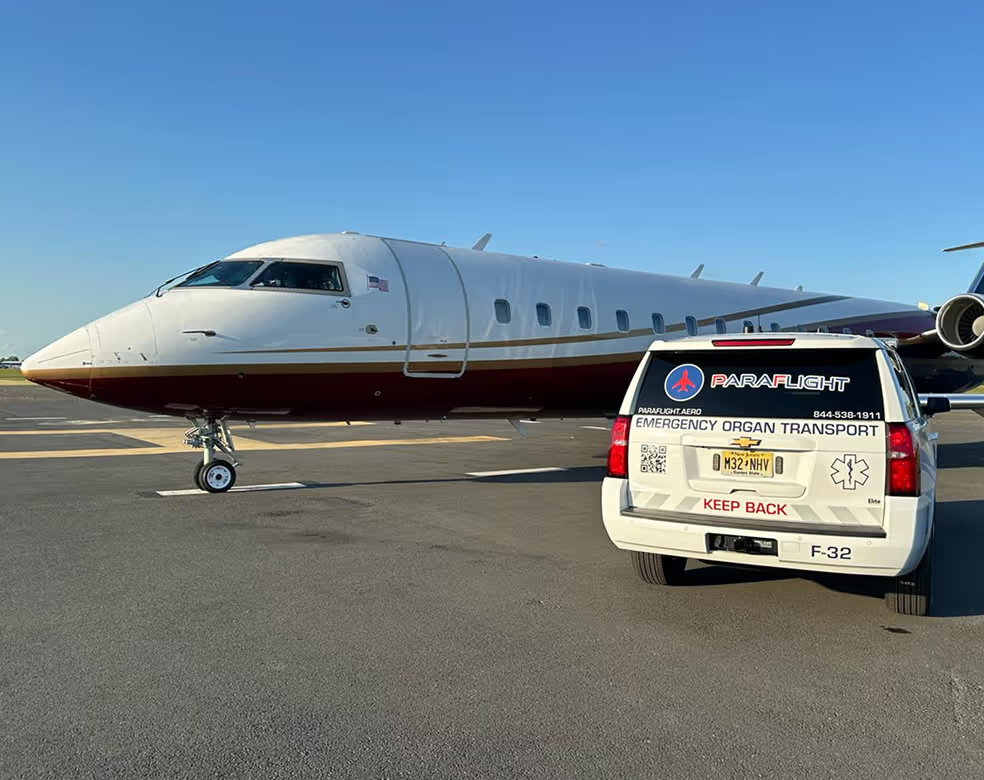
If empty legs are your differentiator, they belong on the homepage with a live feed of current availability. If membership is your differentiator, the site should lead with it, not with a quote form. If specialized missions like organ transport are part of your operation — as they are for Paraflight, another operator we redesigned for with N5 — that work deserves the weight of a first-class page, not a paragraph in the About section.
Sign 4: The site takes more than three seconds to load
A slow site is a luxury failure. Not because Google cares, though Google does. Because the kind of client a private aviation operator wants is a client whose time is expensive. A site that takes three seconds to load is a site that says the brand does not respect their time.
We build every aviation site to load under one second on a normal connection. That is not a technical flex. It is a brand decision. When we handed Hudson Jets a full site in 72 hours, the performance target was the same as it would have been on a six-week timeline. Speed is a positioning choice long before it is a technical one.
Sign 5: You cannot tell operators and brokers apart on the site
In private aviation there is a real, meaningful difference between operators (who own aircraft and fly their own metal) and brokers (who shop quotes across operators they do not own). Clients who know the category know the difference. Clients who do not know the category will assume the two are the same unless the site tells them.
If your site is built like a broker site — a hero image, a paragraph of brand-poetic copy, a quote form — the market will treat you like a broker regardless of what you actually operate. The redesign is where that gets fixed.
What a real private aviation website redesign changes
A real redesign is not a coat of paint. It changes four things at once:
- Positioning. What the site says the operator is, in the first three seconds. This is a copy and structure change, not a design change.
- Structure. What the site leads with. Fleet, membership, missions, empty legs — whatever the operator's real differentiator is, that moves to the top of every path through the site.
- Inquiry flow. How the site converts. Not a generic quote form. A flow that respects what the client is asking about, tied to the specific aircraft or program they are interested in.
- Performance. How the site feels. Under one second on a normal connection. Photography that earns its place, not stock filler.
Change one of these four without the other three and the redesign has not shipped. It has been repainted.
What we do at beterdesign
beterdesign is a Webflow Certified Partner agency for luxury brands. We have built for six private aviation clients across three continents: charter operators with owned fleets (Reliance Jets), membership brands (Hudson Jets, FLY1200), boutique jet groups (JetSet GRP), specialized operators running charter, air ambulance, and organ transport missions (Paraflight), and Teterboro-based operators (ARM Charter).
Every one of those projects started with the same question: what does this operation offer that the others do not? The answer became the site.
If you are considering a redesign, that is the conversation to start with. Send us a brief, or see the rest of the selected work.
Frequently asked questions
How much does a private aviation website redesign cost?
A private aviation website redesign at beterdesign starts at $2,500 for a full studio engagement (identity and website together) and scales based on scope: number of pages, custom CMS structures for fleet and empty legs, and timeline. Rush projects (under two weeks) add $1,000 to the estimate. Most aviation redesigns land in the $3,000 to $5,000 range.
How long does a private aviation website redesign take?
Standard timeline is 2 to 3 weeks from kickoff to handoff. We have shipped in as fast as 72 hours (Hudson Jets), which is possible when the brief is clear and the brand direction is already set. Six to eight weeks is more typical if the redesign includes brand identity work.
What platform do you build private aviation websites on?
Webflow. It is the right platform for private aviation because it gives us design control down to the pixel, a CMS structure the client can update without a development team, and performance that holds under real traffic. beterdesign is a Webflow Certified Partner.
Do you work with charter operators, brokers, or both?
Both, but the sites are structured differently. Operator sites are built around the fleet, the missions, or the membership program. Broker sites are built around the network, the quote flow, and the range of aircraft available. The two categories need different design decisions from the first page.
Can you redesign a private aviation website without changing the brand identity?
Yes. Roughly half the aviation projects we take on are website-only redesigns for operators whose brand identity is already working. The redesign focuses on structure, positioning, inquiry flow, and performance without touching the logo, color, or type system.
Do you provide ongoing maintenance for aviation websites after launch?
Yes, on request. Most of our aviation clients handle content updates themselves through the Webflow CMS we structure for them. For structural changes, new pages, or seasonal campaigns, we work on a retainer or project basis after launch.
Written by the team at beterdesign — a web design agency for luxury brands, with focused work in private aviation, luxury travel, and real estate.


.svg)