



Most aviation websites are built once and left alone for years. The design choices made at launch become permanent defaults, even when the business has moved on.
Our relationship with JetSet GRP works differently. As the company evolves, the website evolves with it. The homepage we recently updated reflects where they are now — not where they were when we first started working together.
That ongoing relationship is also where the most useful design thinking happens.
JetSet GRP is not a standard charter broker
The first thing to understand about JetSet GRP is that their model doesn't fit neatly into the categories most private aviation websites are built for.
They're not a traditional broker sourcing aircraft on demand. They're not a fleet operator with owned aircraft. They operate a membership model — giving clients guaranteed availability, transparent wholesale pricing, and direct access to over 5,000 FAA Part 135 carriers worldwide. Thirty years of operator relationships, structured into a single membership.
That's a fundamentally different value proposition. And it required a homepage that led with the membership, not the fleet.
The structural decision: membership before aircraft
The most common mistake on charter and private aviation sites is treating the fleet as the hero of the homepage. Aircraft photos, category tabs, seat counts, range maps — all of it front and center, before the visitor understands who they're dealing with or why this operator is different from the next one.
For a standard broker or operator, that structure has some logic. The aircraft is the product.
For JetSet GRP, the product is access. The membership unlocks availability, pricing, and a network that no single flight booking could provide. Leading with aircraft selection before the visitor understands the membership model inverts the entire pitch.
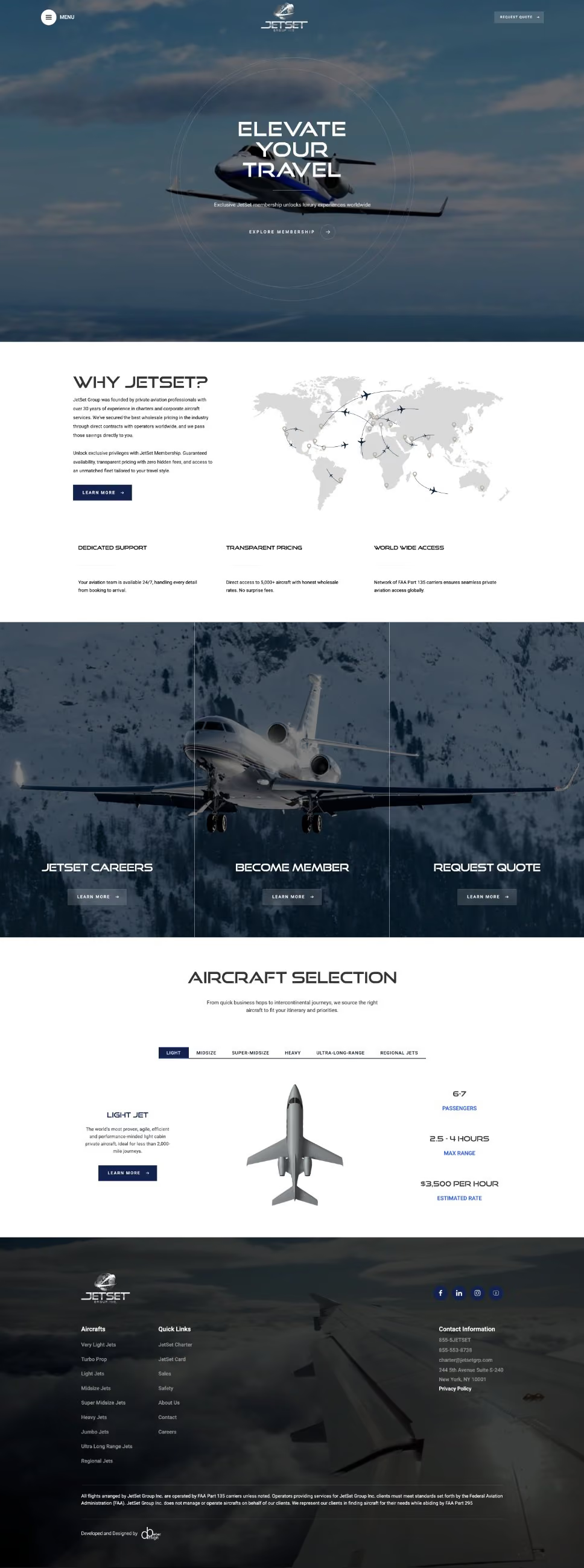
The updated homepage corrects that. The hero establishes what JetSet GRP offers at the category level — elevated private travel through membership — before a single aircraft appears. The fleet section exists, and it's detailed, but it comes after the model is understood.
Three conversion paths, not one
Standard charter sites have one primary conversion goal: the quote request. Everything points to the form.
JetSet GRP's business has three distinct entry points: prospective members, prospective clients booking a single flight, and prospective team members. The redesigned homepage gives each of them a clear path — Become a Member, Request a Quote, and JetSet Careers — presented with equal weight in the same section.
This isn't a design preference. It's an acknowledgment that different visitors arrive with different intent, and a site that only accommodates one of them is leaving the others without direction.
Transparent pricing as a differentiator
One of the more deliberate choices in the homepage is surfacing pricing openly. Estimated hourly rates by aircraft category are visible without a form, without a phone call, without a commitment.
In private aviation, this is still unusual. Most charter sites treat pricing as proprietary information, revealing it only after capturing contact details. The reasoning is understandable — pricing is complex, varies by route and availability, and operators don't want to compete on a number taken out of context.
JetSet GRP's position is different. Transparent pricing is part of the membership value proposition. The whole point is that members get wholesale rates with no hidden fees. Hiding that on the website contradicts the pitch.
Showing it openly, in the fleet section, signals confidence in the model rather than defensiveness about cost.
Why the site keeps evolving
We've worked with JetSet GRP long enough to have watched the business develop. The original site reflected one stage of that development. The current homepage reflects another.
This is something we've come to think of as the right relationship between an agency and a growing client. A website isn't a finished product. It's a working document that should reflect where the company actually is — its current positioning, its current offer, its current market.
The technical signal supports this. Since the homepage update, bandwidth on the site has increased — an early indicator that the page is reaching more people. We'll track that over time.
The design work we did with Reliance Jets followed a similar logic: understand the business model first, then let the design reflect it. The fleet, the pricing, the contact experience — all of it follows from that understanding.
What boutique means in private aviation
JetSet GRP occupies a position that doesn't have a standard template. They're not a large commercial charter operation. They're not a small independent broker. They're a structured membership business with three decades of operator relationships and a specific thesis about how private aviation access should work.
Designing for that position required resisting the defaults. No generic hero video of a jet at takeoff. No quote form dominating the fold. No fleet-first structure borrowed from operators with a completely different model.
The result is a site that communicates what JetSet GRP actually is — which is the minimum any website should do, and the thing most aviation sites fail at.
If your current site describes your category rather than your company, we'd like to understand the project.


.svg)