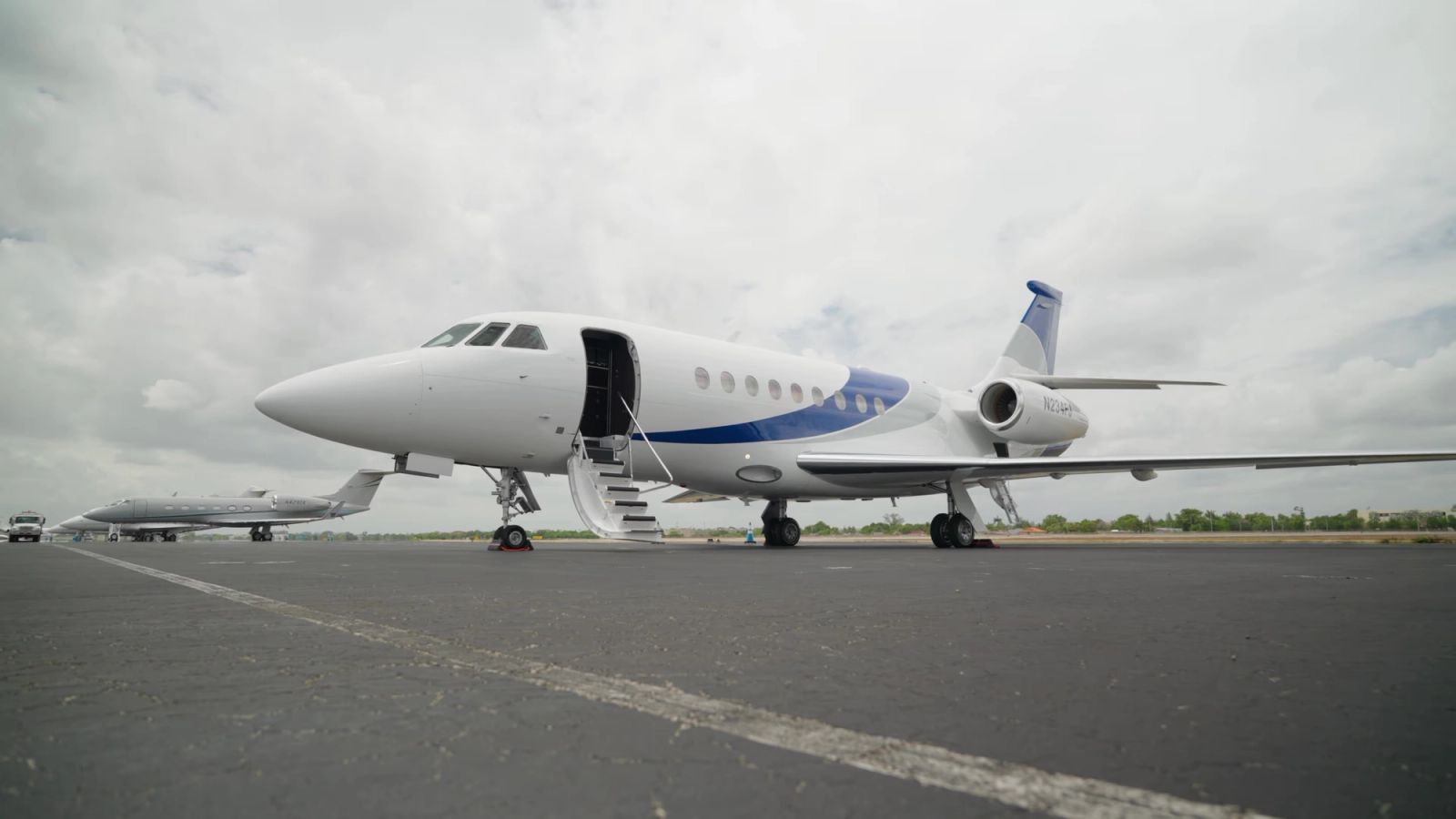
How to build a website for your private aviation business: a step-by-step guide
Everything a private aviation business needs from a new website, in order: model, audiences, first screen, proof, pages, platform, inquiry, search and AI visibility, launch and upkeep. From 30+ private aviation sites.
This article is available in English.
Short answer: a website for a private aviation business works when it states the operating model on the first screen, answers the question each audience arrives with, leads with proof, and is written so Google and AI assistants can quote it. At beterdesign, aviation website design starts at $3,000, brand and website together at $7,000, and a complete luxury aviation website with brand and content typically runs $15,000 to $50,000.
We have designed and built more than 30 private aviation websites: for charter operators, an FBO, aircraft appraisal and acquisition firms, a jet card and membership group, an air ambulance operator and an aviation M&A firm. This is the order we work in, and what we would tell any aviation business planning a site.
1. Decide what you sell, and to whom
Before design, write one sentence: what the business is, and who it serves. It sounds obvious, and most aviation sites skip it.
- A charter operator sells flights on aircraft it owns or operates. See charter website design.
- An FBO sells a place: a terminal, based aircraft, fuel, hours and ground service, at a specific airport. We learned this designing for ARM Charter at Teterboro, where the location is the argument. See FBO website design.
- A jet card or membership program sells access, not a single aircraft. See how to design a jet card page.
- An appraisal or sales firm sells proof: accreditation, method and a defensible number. See aircraft sales and appraisal website design.
- An air ambulance or medical operator sells a fast path to a human in the worst hour of someone's life. See air ambulance website design.
- An aviation M&A firm sells a track record. The Jet Network is the firm aviation professionals call when buying or selling a Part 135 charter certificate, an FBO, a Part 141 flight school or a Part 145 MRO, with $400M+ in completed transactions and 250+ aircraft sales since 2006.
2. List your audiences and the question each one arrives with
A charter client, a member, a pilot, a hospital coordinator, a buyer and a seller arrive with different intent. Write each audience and its question, then give each a clear path from the first screen, in one brand. For Paraflight, which flies charter, air ambulance and organ transport, each audience has its own path.
3. Make the first screen answer the question
The first screen names what the buyer came for and starts answering it. A full-screen jet video that delays the answer costs inquiries. State the operating model in plain words: who you are, what you operate, where, and what happens next.
4. Lead with proof, not atmosphere
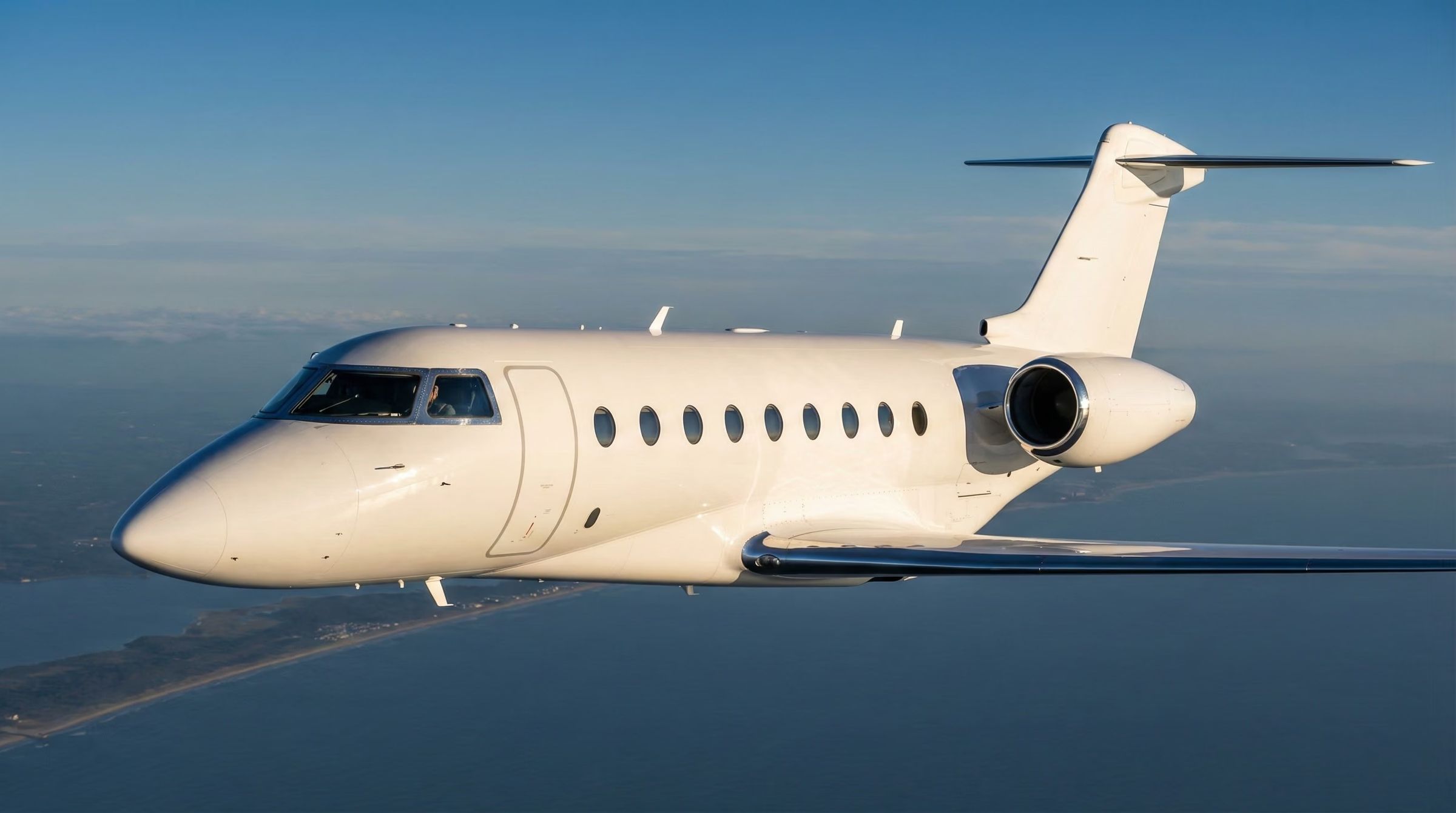
A jet at golden hour is the category default. Proof is what makes one operator different from the next:
- Fleet and operating model for operators.
- Credentials and method for appraisal and sales. The Jet Guys leads with its ASA Accredited appraiser, 27 years in private aviation and USPAP-compliant valuations.
- Numbers for everyone. JetSet GRP grew about 40 percent in the six months after a rebrand, a new jet card system and a new website.
5. Build the pages that get found
Search starts with specific questions, so build specific pages:
- A page per aircraft, with specs, photography, capacity, range and an inquiry tied to that tail number.
- A live empty legs section if you run legs. See how to design an empty legs page.
- A page per service or sector, each with a plain answer at the top.
- Prices or price ranges, where the model allows. JetSet GRP shows estimated hourly rates by aircraft category without a form.
- An FAQ that answers what buyers ask before they call.
6. Choose a platform your team can run
New aviation sites are built in Astro with Sanity as the CMS, or in Webflow when the client wants to edit layouts themselves. Either way, your team should be able to update the fleet, empty legs and articles without a developer. Fast pages matter, because serious inquiries often start on a phone.
7. Make the inquiry qualify
The inquiry should not be a form dropped into a queue. Ask for what qualifies: aircraft or size, route, date, passengers. Tie the inquiry to the page the visitor came from, so the conversation starts further along. A medical aviation site needs a visible 24/7 line on every page instead.
8. Write for Google and for AI assistants
People now ask ChatGPT, Perplexity and Gemini who to hire. These assistants quote pages that state facts plainly. What helps:
- A direct answer at the top of every key page: who you are, what you do, for whom, and the price range.
- Specific claims: numbers, names, places, dates.
- FAQ structure and schema markup, so the questions and answers are machine-readable.
- Consistent facts across the site, your LinkedIn and your directory listings: the same name, the same description, the same numbers.
- A plain-text summary at `/llms.txt` and crawlers allowed in `robots.txt`.
- No security setting that blocks legitimate crawlers.
For the full list, see AEO for private aviation.
9. Launch checklist
- Every old address redirects to its new page, so links and rankings carry over.
- A sitemap, a canonical address on every page and a title and description for each.
- Every page checked on phones and desktops at nine screen sizes.
- Forms tested end to end, including where the email lands.
- Analytics that load only after the visitor agrees.
The Hudson Jets private aviation site was designed and shipped in 72 hours when the brief and content were settled. Most projects take two to four weeks.
10. Keep it alive
Fleet changes, new empty legs, new articles and fresh numbers keep a site relevant. Every site the studio builds, it also maintains on a monthly plan: content updates, new pages, hosting, and regular SEO and performance checks.
Questions aviation businesses ask
What does a website for a private aviation business cost?
Website design starts at $3,000, and brand and website together at $7,000. A complete luxury aviation website, with brand identity and content included, typically runs $15,000 to $50,000. See how much a private aviation website costs.
How long does it take?
Most website or branding projects take two to four weeks. When the brief and content are settled it can be much faster, as with Hudson Jets at 72 hours.
Which aviation businesses do you build for?
Charter operators, an FBO, aircraft appraisal and acquisition firms, a jet card and membership group, an air ambulance operator and an aviation M&A firm. Examples are ONYXX Aviation, Reliance Jets, Paraflight, JetSet GRP, The Jet Guys and The Jet Network.
Can you move our existing aviation site?
Yes. Migrations from WordPress or Webflow to Astro and Sanity are quoted by the size of the site. See website migration.
Do you work with aviation businesses in the United States?
Yes. US aviation work includes ONYXX Aviation in Atlanta and ARM Charter at Teterboro. The studio is based in Belgrade, Serbia, all communication is remote with structured check-ins, and prices are in US dollars.
Next step
See the private aviation work, or start a project and tell us what you operate and who you serve. We reply within two business days.